Inside the 2025 Research Roundtable
How Scientists, Clinicians, and Patients Are Charting a New Course for Superficial Siderosis
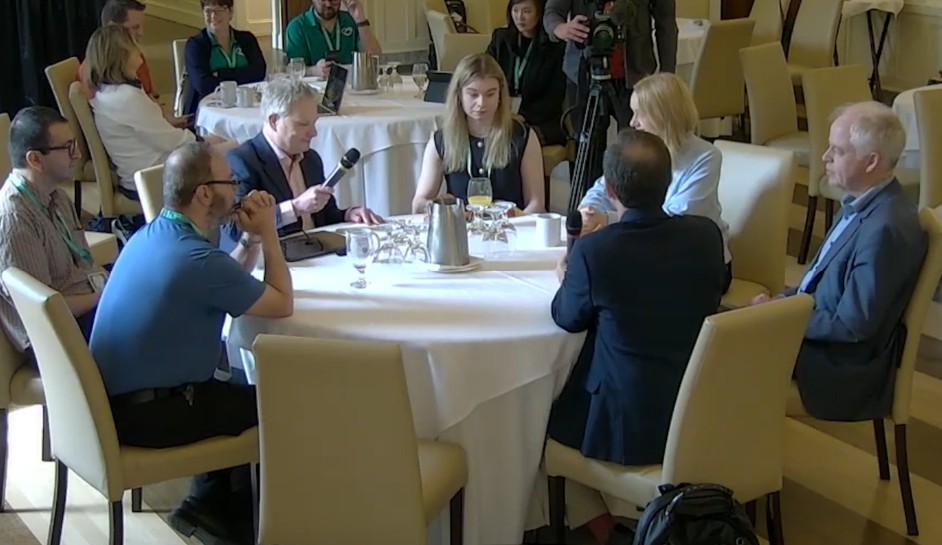
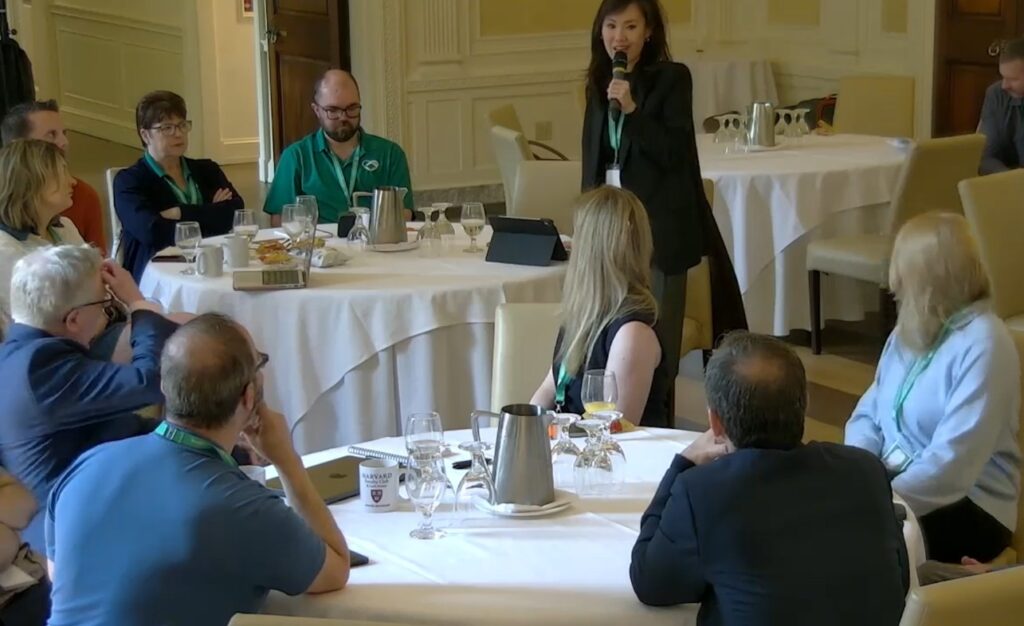
On June 13, 2025, the final morning of the Superficial Siderosis Symposium, neurologists, a neurosurgeon, an MRI researcher, a hematologist, a specialist in audiovestibular Medicine, a clinical fellow in neurology, and audience members gathered together at the research roundtable. It set out to answer a deceptively simple question: What has to happen next so we can finally slow, stop, or even prevent superficial siderosis (SS)? Over two intense hours, the group discussion transitioned from raw epidemiology to cutting-edge imaging, debated spinal fluid biomarkers, explored iron-handling genes, and sketched the outlines of the first genuinely global treatment agenda. Here is what patients and caregivers need to know.
How many of us are there?
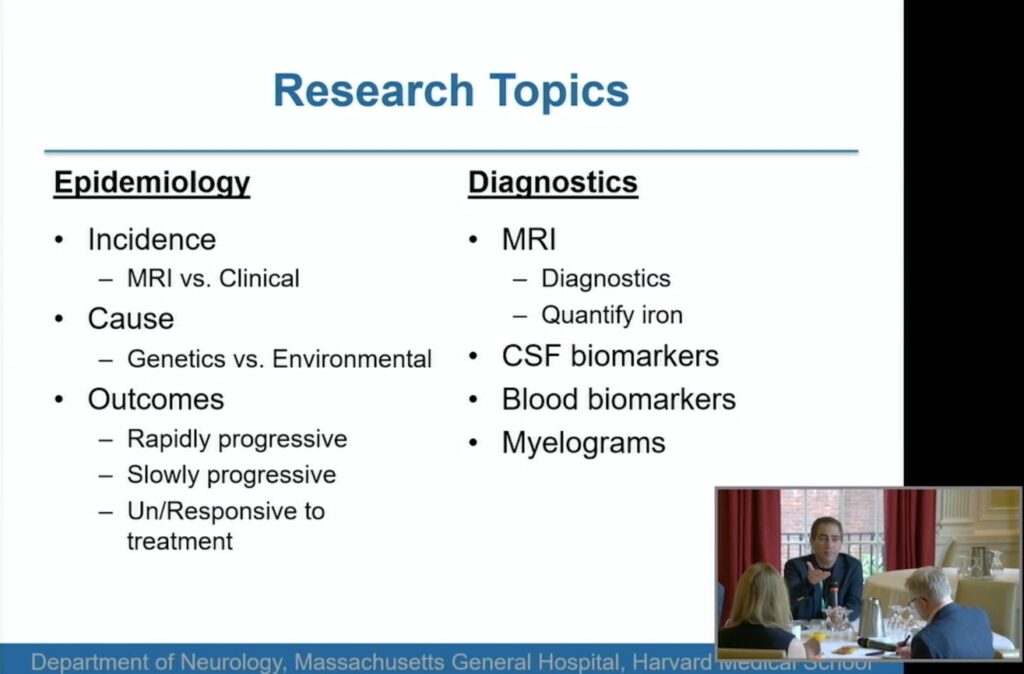
Dr. Michael Levy opened with a reality check. Before any pharmaceutical company will invest, the community must present credible prevalence numbers. Dr. David Werring’s team has already mined 500,000 randomly sampled MRI scans from the UK Biobank, flagging early cerebellar siderosis in a handful of otherwise healthy volunteers. Their hospital-based meta-analysis suggests that radiological SS may reach 40 cases per 100,000 people, orders of magnitude higher than the “1 in a million” folklore clinicians once quoted.
But imaging registries alone are not enough. The roundtable proposed three complementary strategies:
- Population MRI re-reads using susceptibility-weighted imaging in cohorts such as Framingham, Rotterdam, and U.S. Veteran datasets.
- A clinician-notification system through the Association of British Neurologists’ RADAR network to capture every new UK case in real time.
- Expansion of the SSRA’s patient-led registry, already spanning the U.S., the UK, Australia, and more than 20 other countries.
Together, these efforts could deliver the first unbiased global prevalence map; fuel for grant writers and a persuasive market analysis for the industry.
Seeing the iron and the damage it leaves behind
Counting patients is step one; measuring disease activity is step two, and here, the team confronted the limits of current imaging. Dr. Levy described his “how-much-black” experiment, in which he manually outlined the brain on serial MRIs and calculated the ratio of the darkest to the brightest pixels. The method suggested a falling hemosiderin burden over ten years but remained too crude for a trial.
Enter Dr. Natallia Kharytunik. Forced into remote PhD work during COVID lockdowns, she reviewed more than 12,000 Biobank scans and, with a neuroradiology colleague, built an anatomical rating scale that produced “very high intra- and inter-rater agreement.” The next step is to publish guidelines so that any center can score siderosis the same way.
Yet iron alone does not tell the whole story. Professor Werring urged the group to quantify tissue volume loss, especially in the cerebellum and cervical cord. Modern software can generate precise volumes from routine T1-weighted images, independent of scanner brand and immune primarily to iron artifacts. Volume loss correlates with clinical disability in other neurodegenerative diseases, making it a powerful efficacy endpoint.
An Imaging Working Group is now forming to integrate both approaches, iron mapping, and neurodegeneration metrics, providing future trials with a dual readout of cause and consequence.
Spinal-fluid biomarkers: friend or foe?
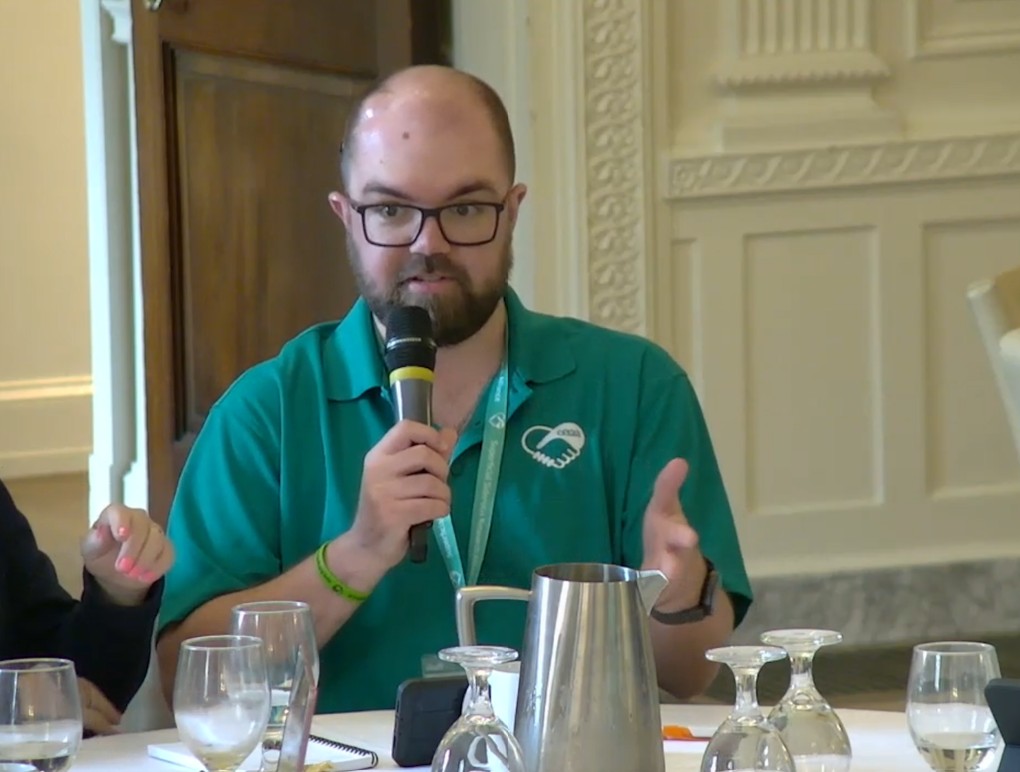
Would you volunteer for an annual lumbar puncture? Dr. Levy posed the question bluntly. The answers captured the spectrum of patient sentiment. Rhys Holmes, who has watched his CSF ferritin levels plunge after dural-leak repair, said repeat punctures, done under fluoroscopic guidance, give him “hope” and objective proof that surgery worked. Dr. Pamela Lim, herself a CSF-leak patient and physician, countered that poorly executed taps can create lifelong leaks and called for less invasive markers.
From the scientific perspective, Professor Werring noted that CSF ferritin, similar to HbA1c in diabetes, may integrate bleeding activity over several months. Queen Square already runs the assay for subarachnoid hemorrhage. The facility may be able to process international samples if a centralized siderosis biobank were established. The consensus is that no biomarker should be forced on patients. Still, offering an expert, low-risk tap (or collecting CSF opportunistically during diagnostic myelograms) can yield invaluable data while respecting individual choice.
Genetics and Susceptibility: Why Do Some Bleed and Others Rust?
The room’s curiosity centered on why similar leaks produce wildly different outcomes. Dr. Wouter Schievink described whole-exome work that identified Fibrillin-2 variants in patients with spontaneous leaks, suggesting subtle connective-tissue fragility. Dr. Philip Haddad proposed sequencing the heavy- and light-chain ferritin genes because the ratio of these chains determines how efficiently cells sequester iron away from nervous tissue.
Large-scale answers may lie in existing resources. The U.S. “All of Us” and Million Veteran databases already bank DNA from millions; similar national biobanks exist in the UK and Scandinavia. With IRB approval, researchers could genotype confirmed SS cases at marginal cost and search for risk-modifying alleles, another lever for future precision therapies.
Natural history and risk stratification
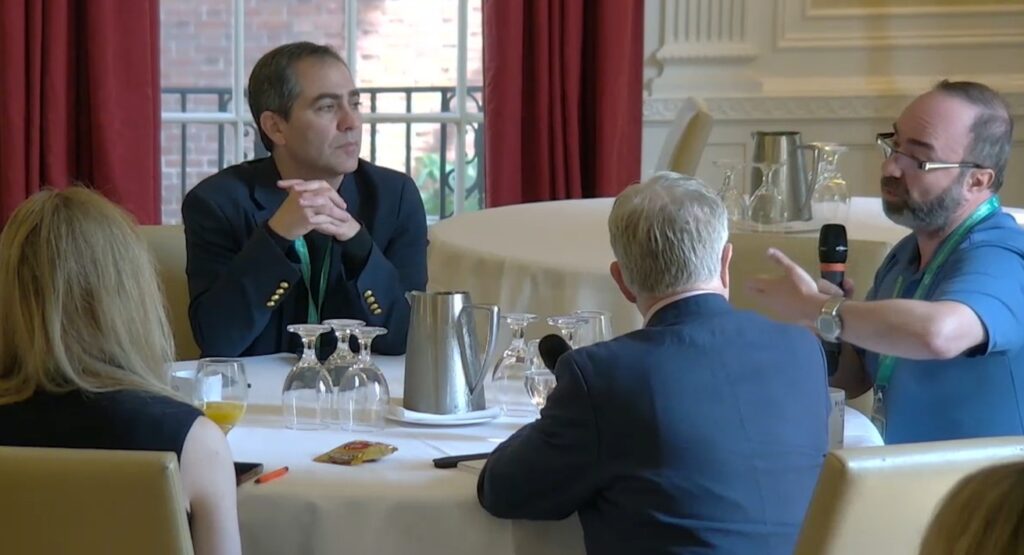
The research roundtable conversation repeatedly returned to the topic of heterogeneity. Patients injured by a brachial-plexus avulsion, those with spinal tumors, and those with spontaneous idiopathic leaks may travel very different clinical paths. Dr. Haddad drew parallels with oncology, advocating for a data-driven risk score that combines the cause of bleeding, imaging burden, CSF markers, and genetic profile to predict progression and target early intervention. Such stratification will be crucial when trial slots are scarce and experimental drugs are precious.
From talk to treatment: stopping the bleed and chelating the iron
The roundtable agreed that future care will rest on a two-pillar strategy:
- Stop the source. Dr. Wouter Schievink was tasked with drafting a neurosurgical standard pathway, from dynamic myelogram to ventral dural repair, to be shared across centers.
- Clean up the iron. While many patients already use deferiprone, no controlled safety dataset exists for SS. Drs. Levy and Werring outlined a pragmatic safety study, pairing monthly blood counts with objective endpoints, such as cerebellar volume or CSF ferritin. In parallel, the team will approach companies developing next-generation, brain-penetrant chelators, offering the SS community an agile model for first-in-human efficacy trials.
Placebo arms? It’s ethically tricky, but not impossible. One suggestion: enroll only patients who have already undergone leak repair (the standard of care) and randomize them to chelator versus observation, with early escape if imaging or biomarkers worsen.
Deliverables and deadlines
Before adjourning, participants committed to a tangible post-symposium roadmap:
- Continued Research Meetings via remote to track progress.
- Manuscript submissions: Dr. Natallia Kharytunik, imaging scale, prevalence meta-analysis update, and a surgical-protocol white paper.
- Formation of three task forces—Imaging, Biomarkers/Biobank, and Genetics, each with patient-researcher co-chairs.
- Funding hunt: SSRA will support the submission of parallel funding applications to NIH, UK NIHR, FDA, and the Department of Defense’s rare disease calls.
What does this mean for patients and caregivers?
The roundtable made clear that your contribution, whether it’s MRI discs in the closet, lab slips in a drawer, or a willingness to share your story, can accelerate every one of these initiatives. Prevalence counts require self-registration; imaging algorithms necessitate diverse scans; biobanks necessitate carefully shipped CSF or blood; and trial designs demand lived-experience feedback on acceptability and burden.
Superficial siderosis remains rare, but after this meeting, it is no longer “orphaned.” A global, multidisciplinary team has agreed on what needs to be built and, crucially, how patients will stay at the center of the science. As Dr. Levy summed up: “We really should be doing this, blood, spinal fluid, MRI, tied together in one siderosis biobank.”
With the momentum of the Boston roundtable and the collective power of the SS community, that vision is suddenly within reach.