Event

A Heartfelt Evening and Inspiring Patient Day
The 2025 Superficial Siderosis Symposium
Our reception evening on June 11 started with perfect early summer weather. The excitement we felt as SSRA organizers was quickly eclipsed by the arrival of our guests. There was laughter, hugs, and the joy of finally meeting people face-to-face after years of online interactions. I even joked to Rhys’s mom that we might need to set him up with a table for autographs if the enthusiasm kept up!


Slider 2
Slider 3

Slider 5

Slider 6
Slider 7

Slider 8
Slider 9
Slider 10

Slider 11

Slider 12

Slider 13

Slider 13

Slider 14


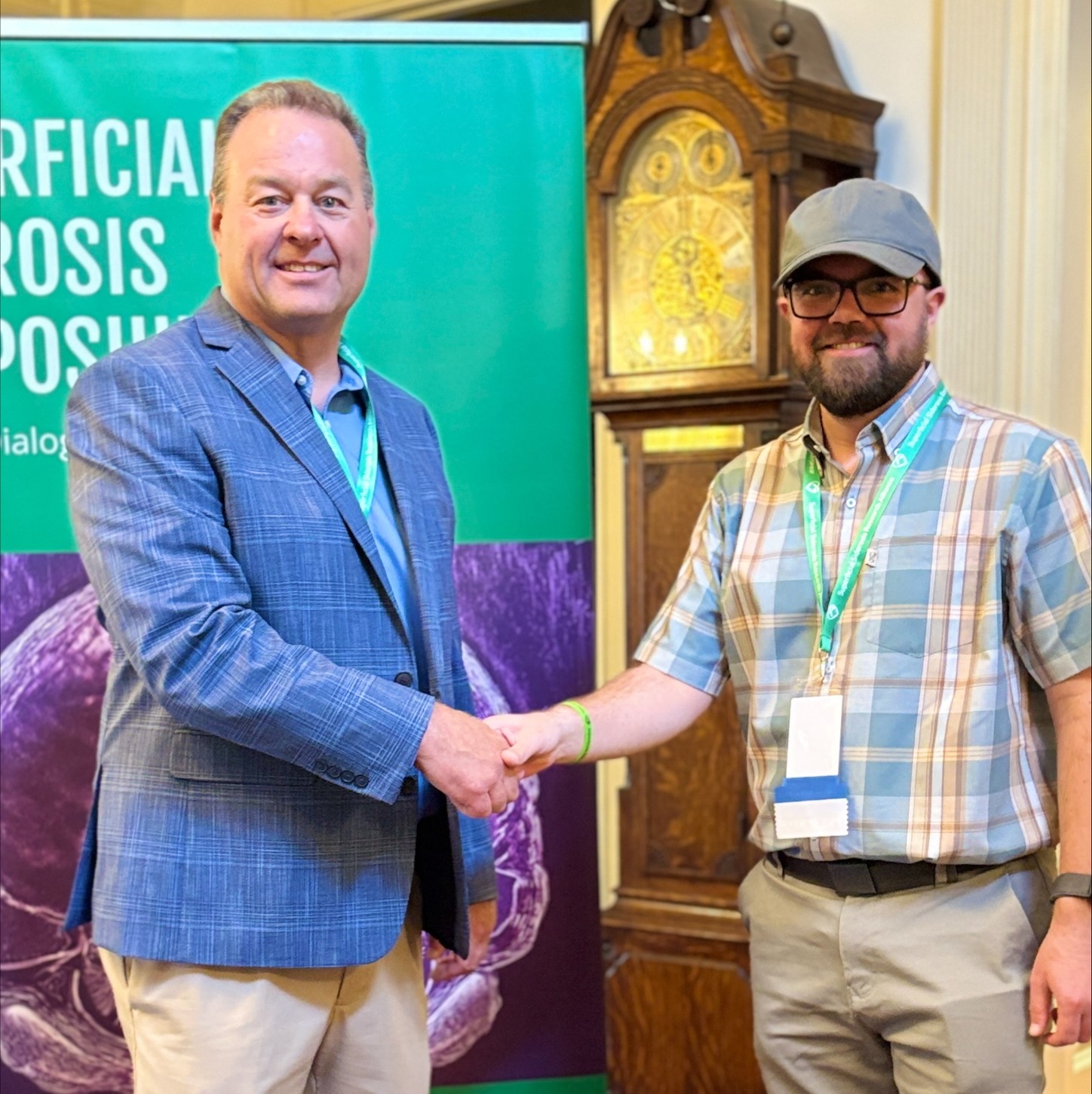

As the evening got into full swing, we loved introducing our wonderful speakers to everyone. Conversations flowed easily, and the room buzzed with energy. When dinner was announced, we moved into the ballroom, where everyone sat down with new friends and continued sharing stories. Dinner was amazing, and Kyle Dempsey, SSRA President, along with Dr. Michael Levy, gave warm opening remarks and shared some exciting news. (You can watch the full program replay on our YouTube channel HERE.)
Patient Day: Inspiration, Education, and Community

Patient Day began with a few A/V glitches and connection problems for our remote presenters, but we were able to overcome them. (One important lesson learned was the absence of closed captioning for in-person guests, something we will remedy at future events.)
Alli Ward, Director of NORD Membership, opened the day with a heartfelt welcome and explained how NORD helps small rare disease organizations like the SSRA support their communities.

Professor David Werring, PhD, FRCP, began the presentations with an important talk on why a multidisciplinary care approach is crucial for patients with superficial siderosis.
“Why do some people progress more than others? Some can remain very stable, while others progress quickly. I don’t think we fully understand this yet.”
Professor Werring, from the UCL Queen Square Institute of Neurology, emphasized the importance of collaborative care in achieving patient outcomes.

Dr. Natallia Kharytaniuk then delivered a fascinating presentation on hearing and balance function, as well as cochlear implants in superficial siderosis. Dr. Kharytaniuk completed her PhD by comparing hearing in the general population with that of patients with superficial siderosis.
“We set out to look at the characteristics of hearing and balance function in our cohort and tried to identify the likely affected segments of the auditory and vestibular pathways.”

After a short break, Dr. Michael Levy, Chief Medical Advisor to the SSRA, delivered the keynote speech with a comprehensive overview of “What is Superficial Siderosis?” Guests saw what siderotic tissue looks like and learned why many iron chelators struggle to work effectively.
“When ferritin binds iron, it makes hemosiderin that gets trapped in the spinal fluid. Every once in a while, ferritin releases the iron, which then causes oxidative damage to the fatty tissue of the brain. That’s the fundamental problem.”

Dr. Wouter Schievink, Professor of Neurosurgery at Cedars-Sinai, shared an in-depth presentation on neurosurgical closure of dural defects and spinal fluid leaks in superficial siderosis. He explained the importance of CT myelograms and more advanced techniques like digital subtraction myelograms:
“There are many different types of spinal fluid leaks. We’ve categorized them into four types, including CSF venous fistulas — a newer type we only discovered about 12 years ago.”

Dr. Philip Haddad, professor of medicine at LSU Medical School in Shreveport, discussed the importance of careful monitoring during chelation therapy with deferiprone. He also shared insights on promising new iron chelators in development.
“It’s very important to educate patients and emphasize compliance with monitoring tests and reporting symptoms early.”

Mr. Jakko Brouwers joined remotely, though internet issues made the audio difficult to understand. Thankfully, the transcript captured his talk well. His slides told the inspiring story of how targeted physiotherapy helped Rhys Holmes, a patient with superficial siderosis, regain his ability to walk and manage his balance problems.
“We’ve not only helped Rhys regain walking and balance, but also improved his overall quality of life.”
Unfortunately, Dr. Tom Hughes was unable to give his presentation due to connection problems. We hope to have him record it later so we can share it with everyone.

Our final speaker before the Q&A panel was Rhys Holmes, a patient with superficial siderosis and a SSRA patient advocate. Rhys shared his powerful journey, from the childhood event that led to his condition, through unexplained symptoms, years of testing, and the eventual diagnosis of superficial siderosis. He candidly discussed the impact of losing his hearing, his battle with depression, and the life-changing success of his cochlear implant — hearing his parents’ voices again, the sound of rain on his jacket, and the return of his love for music. Rhys also explained how adaptive devices, a healthy diet, and regular exercise have significantly improved his well-being and are essential for maintaining his independence.
“Symptom management is a full-time job. It takes a lot of work just to maintain everything.”
Looking Ahead
Our first-ever SSRA Symposium was a true milestone, six years in the planning and making, bringing patients, caregivers, clinicians, and researchers together for an unforgettable two days of community and learning. We are so grateful to everyone who joined us in person and virtually. Stay tuned for our next article covering the Patient Q&A Panel, where pressing questions were answered directly by our speakers. Together, we’re building a brighter future for everyone affected by superficial siderosis.
SSRA Admin
0