Remembering Dr. Uriel Chaim Goldberg
1951 – 2025
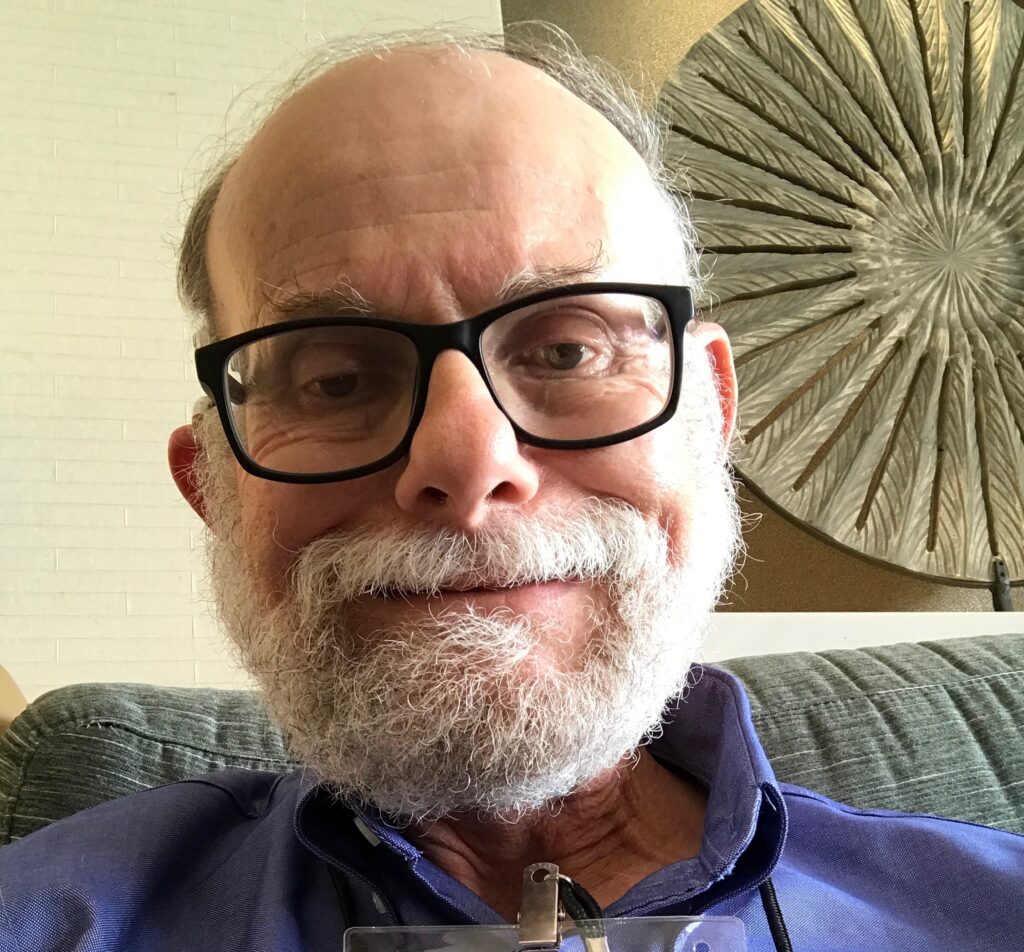
Uriel Chaim Goldberg, Ph.D., was a gifted scientist, an innovative engineer, and a man of quiet integrity whose final act of generosity will continue to advance the understanding of Superficial Siderosis.
Uriel earned his Ph.D. in Physics in 1984, building a lifelong career studying turbulence and fluid dynamics. He devoted his professional life to aerospace engineering and computational fluid dynamics (CFD), developing advanced mathematical models that helped engineers simulate the movement of air and fluids more accurately. Over the course of his career, he authored almost 100 published papers. He presented his research at conferences around the globe, sharing his expertise and contributing to the advancement of his field. He was especially proud that NASA engineers used his turbulence model, which is listed seventh on the NASA website.
In later years, Uriel faced the challenges of Superficial Siderosis. Despite the growing impact of hearing loss, balance difficulties, and fatigue, he met each day with quiet determination and intellectual curiosity, the same qualities that defined his life’s work.
When Uriel passed away in September 2025, he and his family made an extraordinary and deeply selfless decision: they chose to donate his brain and spinal cord tissue for research into Superficial Siderosis. Because such donations are so rare, this gift is invaluable. It will allow scientists to study siderotic tissue directly and deepen the understanding of how this disease develops and progresses.
Uriel’s wife, Margaret, shared that a colleague once reflected on his philosophy of innovation: Progress begins when innovators challenge old methods and pursue new thinking. In Uriel’s view, science could not move forward if people always approached problems the same way. That belief speaks directly to research aimed at understanding and treating Superficial Siderosis. Just as Uriel pushed the boundaries of known theories in his field, researchers and clinicians must also be willing to take bold steps, ask new questions, and search for answers in unexplored directions.
Uriel’s legacy bridges science and humanity. In his lifetime, he helped engineers model turbulence in the physical world. In his passing, through his and his family’s generosity, he helps researchers navigate the turbulence of a rare and little-known disease. His life’s work and his belief in the power of new ideas will continue to guide discovery and offer hope for years to come.